
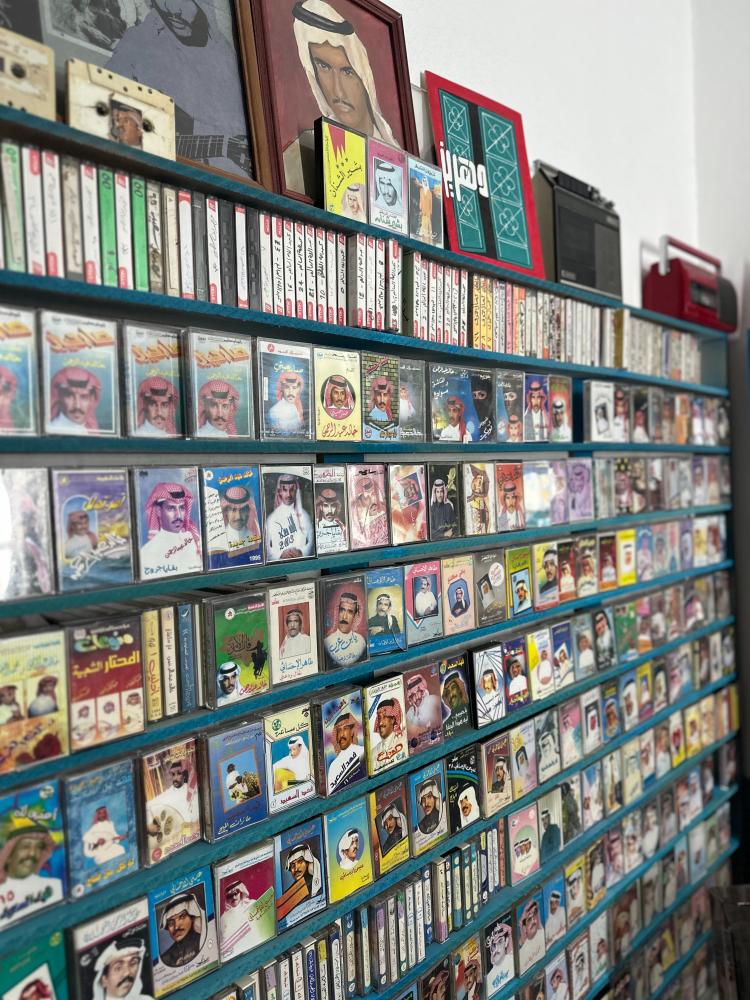
The Cassette: The Tape That Changed Music and Kept Generations' Memories
From the click at the start to winding the tape back with a pencil, no generation lived through the cassette without a story. The cassette isn't just a way to record sound; it's a piece of our collective memory — its sound is warm, its feel is nostalgic, and its tape records moments of life with everything in them.
At Dhrez, we take you back to the days of the cassette and tell you about its history, its beginnings, its impact on the music world, and why today it has become one of the rarest classic audio collectibles.
What Is a Cassette Tape?
The cassette — officially known as the Compact Cassette — is a small magnetic tape inside a plastic shell, used to record and play sound. It was invented by the Dutch company Philips in 1963, originally to make recording notes and meetings easier.
But what nobody expected was that this small tape would become the heart of the music industry in the 1970s and 1980s, spreading around the world like nothing before it.
How Does a Cassette Work?
The cassette relies on a thin magnetic tape that passes over record/playback heads in the cassette player. When you record, sound waves turn into magnetic signals stored on the tape. When you play it, the tape translates those magnetic signals back into sound.
The cassette has two "sides" — A and B — each holding a set duration (usually 30 to 45 minutes), and it can be re-recorded many times.
Its Golden Age: the 1970s to the 1990s
The cassette really took off in the mid-1970s, especially after Sony launched the Walkman in 1979. You could listen to your music wherever you went, and the cassette became a personal, portable way to enjoy sound.
At home and in cars, the cassette became the main way to listen:
- Full albums by great artists like Umm Kulthum, Mohammed Abdu, Abdul Majeed Abdullah and Abdel Halim.
- Recordings of sessions, shailat, anthems and sermons.
- Recorded radio programs and personal "mixes" people made themselves.
The Cassette and Daily Life
Before the internet, the cassette was a tool:
- For expression: you could record your voice, gift a recording, or document special moments.
- For learning: audiobooks, languages, lectures.
- For sharing: many people recorded from the radio and gave the tape to a friend or loved one.
Winding with a pencil was a symbol, the hiss was part of the ritual, and recording over a tape was a tough decision full of sadness and adventure.
Decline… Then a Comeback
With the arrival of CDs and then MP3, the cassette began disappearing from the market. But the surprising part? It came back! In the last decade there has been worldwide interest in original cassettes:
- People want the warm sound they can't find in digital audio.
- There's a passion for old designs, artistic covers, and even the way it's played.
- Many major artists around the world have started releasing their work on cassette again as a form of refined nostalgia.
Cassettes at Dhrez: Recordings of the Golden Era
At Dhrez, we search for, collect and preserve the most beautiful and rarest cassette tapes:
- Original cassettes in their first condition
- Rare albums by artists from the Gulf and the Arab world
- Special recordings, sessions and concerts you won't find anywhere else
Whether you're a collector, looking for an old recording that left a mark on you, or just want to pop in a tape and play your memories… Dhrez is your place.